

Every day, Bernadette helps older adults and people with disabilities with the routines that make it possible to live safely at home. She shops for groceries, pays bills, coordinates doctor’s appointments, orders supplies, and helps clients navigate the challenges that come with aging or disability.
For the past eight years, those responsibilities have taken her into multiple homes each day. The tasks may change from client to client, but one thing has remained constant: meaningful care grows through lasting relationships.
Behind every successful care plan is a caregiver who knows a client’s routines, recognizes subtle changes, and earns their trust. Those connections aren’t built overnight - they develop through consistency, experience, and a workforce that has the support to stay.
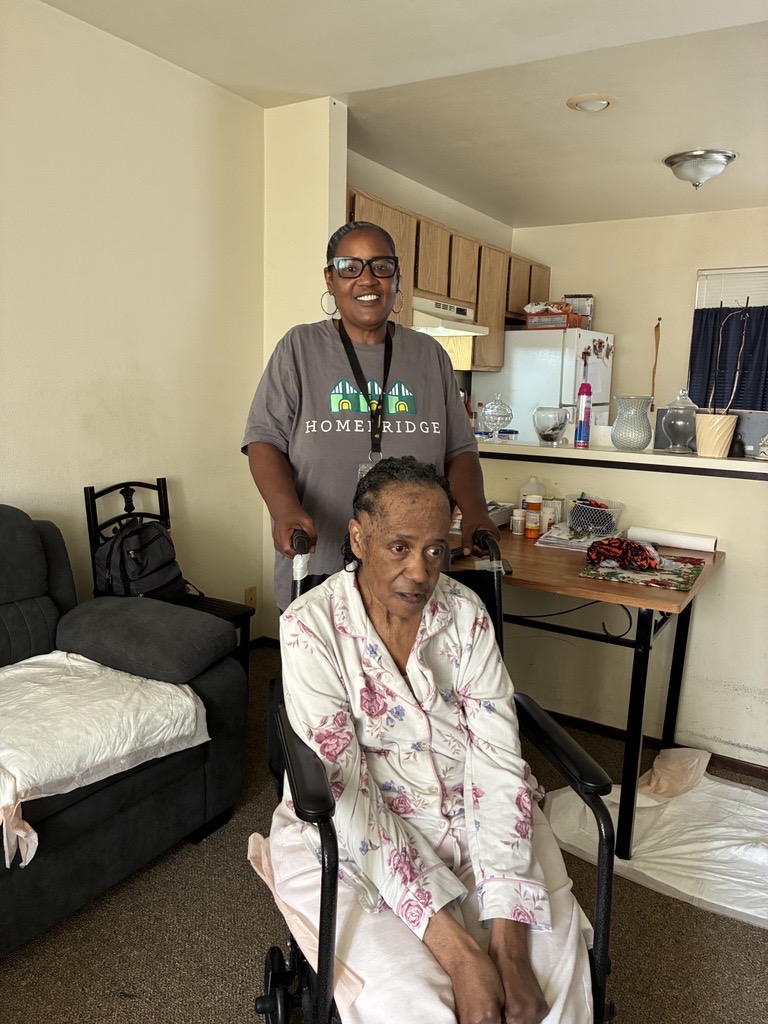
Bernadette with her client, Ora.
“The most rewarding thing is when I get along with my client, we collaborate to solve problems, and I can really help them.”
Bernadette sees the value of that continuity whenever she fills in for another caregiver. Clients are sometimes reluctant to let her in because they are waiting for someone they know. Rather than taking it personally, she understands what those moments represent: the comfort and reassurance that come with familiar faces.
That familiarity helps people feel secure, reduces uncertainty, and allows caregivers to notice changes that someone new might miss. When experienced caregivers remain in the workforce, those connections deepen. When turnover is high, maintaining that continuity becomes much harder.
Supporting caregivers is just as important.
Throughout her career, Bernadette has leaned on colleagues like Crystal Robinson and former Care Supervisor Katherine Read - people she describes as deeply committed to their clients, strong communicators, and always willing to help. Their guidance has helped her navigate both the rewards and the emotional realities of caregiving, including the loss of clients she had grown close to over the years.
She has also learned that sustainable caregiving depends on healthy boundaries. Standing up for herself in difficult situations and being clear about what she can and cannot do allows her to continue showing up for the people who depend on her.
Long before she joined Homebridge, Bernadette’s understanding of care began at home while supporting her grandmother, who was living with dementia. Throughout her career - including her time as a medical assistant and working in retirement communities - she has carried one belief with her: “Everyone needs help. It’s about helping people. Who knows, one day, I may need help.”
Today, that perspective shapes the way she cares for clients, especially those who do not have family nearby to advocate for them. It also influences how she thinks about her own future. As her mother approaches 80, Bernadette says the skills she has gained throughout her career will help her care for her own family.
“I’m all about family.”
“Everyone needs help. It’s about helping people. Who knows, one day, I may need help.”
- Bernadette Young
Care at home makes it possible for millions of older adults and people with disabilities to remain connected to their homes, families, and communities. That care depends on more than the services provided - it depends on experienced caregivers who have the training, stability, and support to build lasting relationships.
Investing in caregivers strengthens the foundation of home and community-based care. When caregivers have the opportunity to remain in the profession, more people can continue living with independence, dignity, and connection - in the place they most want to be: home.